
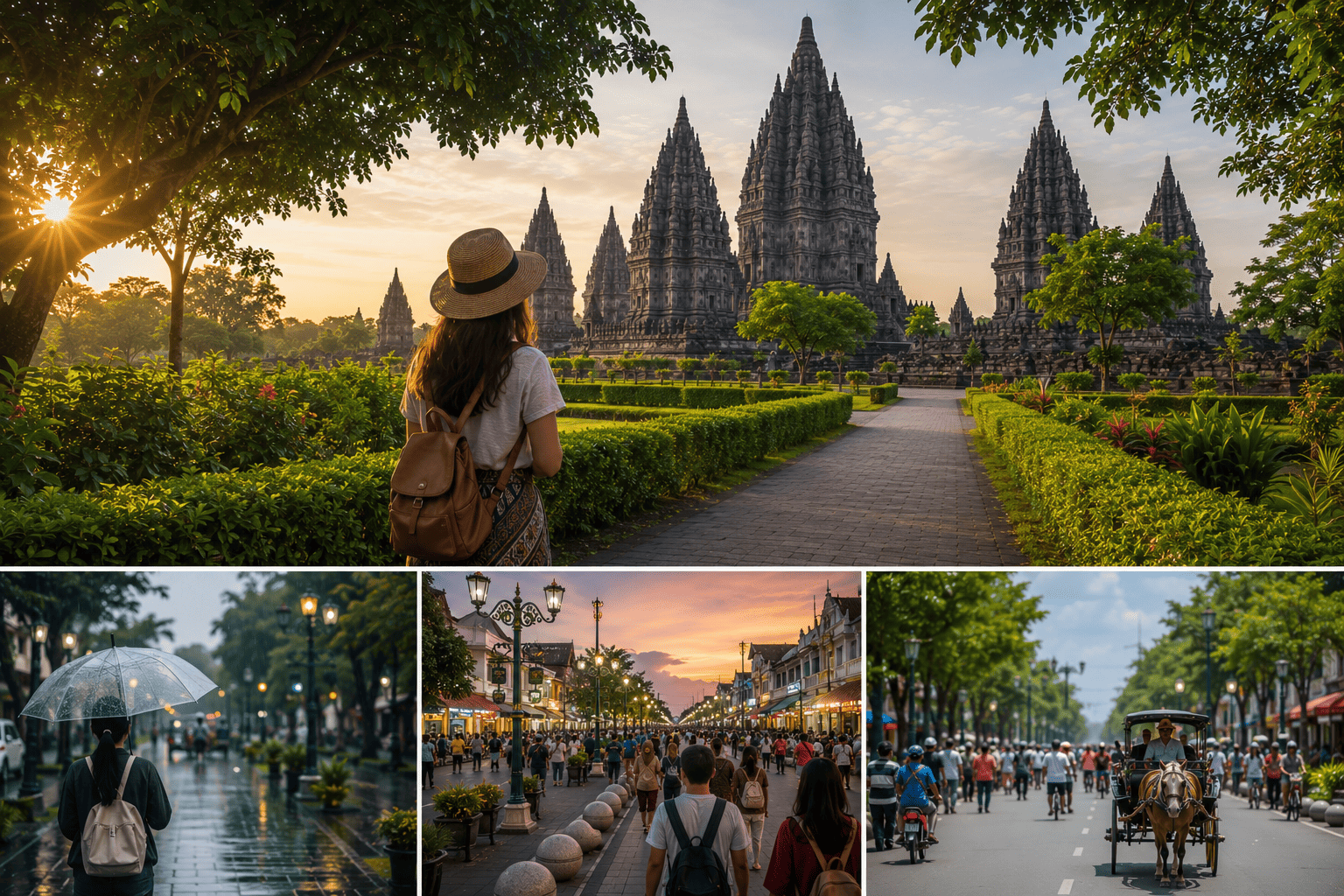
Yogyakarta welcomes travelers throughout the year with temples, culture, nature, and local experiences. However, weather and visitor numbers can influence your trip. The Best Time to Visit Yogyakarta depends on your preferred activities, budget, and tolerance for rain. Understanding the seasons can help you plan a more comfortable journey.
Visit During the Dry Season
The dry season usually offers easier conditions for outdoor activities. In Indonesia, the dry period generally falls between April and October, although local weather patterns can vary.
Travelers can spend more time exploring temples, beaches, and outdoor attractions during this period. Clearer conditions also help with photography and scenic viewpoints.
Borobudur, Prambanan, Mount Merapi, and Gunungkidul work well during drier months. Start early to avoid stronger midday heat.
Consider May to September for Outdoor Trips
May to September often suits travelers who want to focus on outdoor sightseeing. Rain usually causes fewer disruptions during the drier part of the year.
You can explore Borobudur in the morning, visit Prambanan in the afternoon, or plan a Mount Merapi jeep trip. Beach trips also become easier when road and weather conditions remain favorable.
However, popular attractions may attract more visitors during school holidays and major vacation periods. Book transportation and accommodation early when traveling during busy dates.
For broader planning ideas, read this Yogyakarta tourism guide to culture, heritage, nature, and unforgettable experiences.
Travel During the Rainy Season
The rainy season creates a greener landscape across Yogyakarta. Travelers can still enjoy temples, museums, cultural sites, food experiences, and city attractions.
Rain often requires a more flexible itinerary. Keep an umbrella or light rain jacket in your bag. You should also allow extra travel time during heavy rainfall.
BMKG reported that January and February generally mark the peak rainy period in Yogyakarta. Travelers who visit during these months should check daily weather forecasts.
The rainy season can still appeal to visitors who prefer a slower trip. Green rice fields and misty landscapes also create attractive photography opportunities.
Choose Weekdays for Fewer Crowds
Travel days can matter as much as the season. Weekdays usually create a calmer sightseeing experience than weekends or public holidays.
Visit major attractions early in the morning when possible. You can enjoy cooler temperatures and spend more time exploring before larger crowds arrive.
An early schedule also helps when you want to combine several destinations in one day.
Match the Season With Your Activities
Different activities require different conditions. Choose drier weather for beaches, Mount Merapi, cave adventures, and long outdoor itineraries.
Cultural attractions offer more flexibility throughout the year. Keraton Yogyakarta, Taman Sari, Kotagede, museums, and batik workshops can fit easily into rainy-day plans.
Food tours and shopping around Malioboro also provide good alternatives when outdoor conditions change.
Plan Your Yogyakarta Trip
Good planning helps you enjoy Yogyakarta in any season. Check weather forecasts and create backup options before each day.
Private transportation can also make seasonal travel easier. You can adjust departure times and change destinations when weather conditions shift.
Explore private Yogyakarta tours with flexible itineraries if you want local support for temples, nature, culture, and day trips.
Conclusion
The Best Time to Visit Yogyakarta depends on the experience you want. The dry season generally suits outdoor adventures, while the rainy season offers greener scenery and flexible cultural experiences. Choose weekdays, start early, and check current weather conditions. With good planning, Yogyakarta can deliver a memorable trip throughout the year.
