
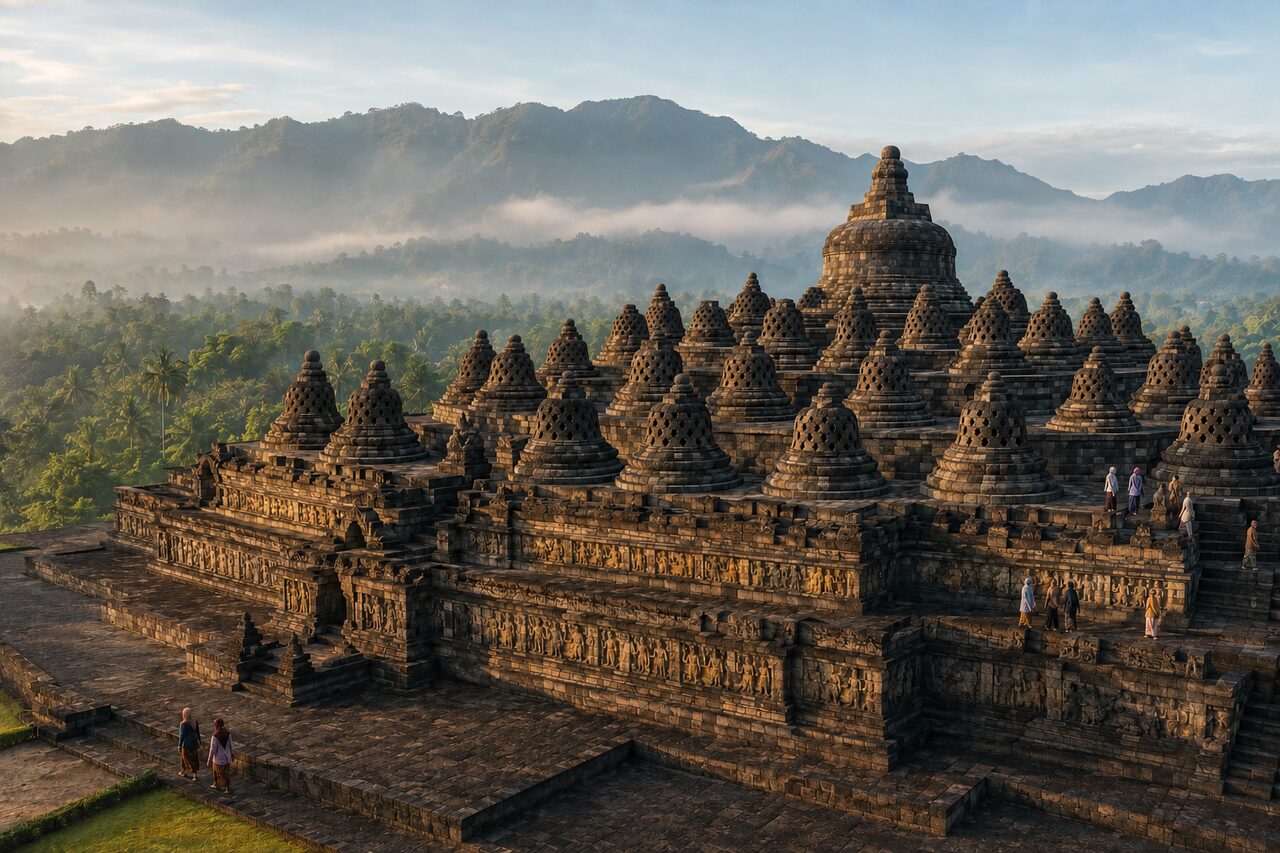
A Borobudur World Heritage Monument guide helps travelers discover the international importance of one of Indonesia’s most extraordinary historical landmarks. Borobudur represents a remarkable combination of ancient architecture, Buddhist philosophy, cultural identity, and artistic achievement.
Many travelers visit Borobudur to experience its beauty and peaceful atmosphere. However, the monument holds a much greater meaning because it represents the achievements of ancient civilization and the importance of cultural preservation.
For travelers aged 25 and above, understanding Borobudur as a world heritage monument creates a deeper travel experience. The temple offers valuable lessons about history, spirituality, and human creativity.
Global Importance of Borobudur
The Borobudur World Heritage Monument is recognized as one of the most significant cultural landmarks in Indonesia.
Built during the Sailendra Dynasty around the 8th and 9th centuries, Borobudur reflects the advanced knowledge of ancient Javanese society.
The monument demonstrates exceptional achievements in architecture, stone carving, and religious expression.
Its unique design and historical value have made Borobudur an important destination for travelers, researchers, and cultural enthusiasts from around the world.
Travelers can explore more about Borobudur’s history, architecture, and cultural significance through this complete guide to Borobudur Temple facts, history, architecture, and culture.
A Masterpiece of Ancient Architecture
One of the reasons Borobudur gained worldwide recognition is its extraordinary architectural design.
The monument follows a mandala concept that represents Buddhist cosmology.
Its structure includes three symbolic sections: Kamadhatu, Rupadhatu, and Arupadhatu.
These levels represent different stages of spiritual development.
Additionally, Borobudur contains hundreds of stupas and thousands of relief panels that demonstrate the artistic skills of ancient craftsmen.
The combination of architecture and philosophy creates a unique experience for visitors.
Borobudur as a Cultural and Historical Record
Borobudur functions as more than a religious monument.
The relief panels carved into the temple walls provide information about ancient Javanese society.
Visitors can observe scenes showing traditional houses, transportation, clothing, farming activities, and social interactions.
These carvings help historians understand the lifestyle and culture of people who lived more than a thousand years ago.
Furthermore, the reliefs preserve stories about Buddhist teachings and moral values.
The Journey of Preservation
Maintaining a world heritage monument requires continuous protection.
Over centuries, Borobudur faced challenges from natural conditions, volcanic activity, and environmental changes.
Restoration programs have played an important role in preserving the temple’s structure.
Experts and conservation teams continue to protect Borobudur so future generations can experience its historical value.
The preservation of Borobudur demonstrates the importance of protecting cultural heritage worldwide.
Experiencing Borobudur as a Traveler
Visiting Borobudur offers more than viewing an ancient structure.
Travelers can explore the meaning behind the architecture, discover stories from the relief panels, and understand the cultural values connected with the monument.
A local guide can provide deeper explanations about the history and symbolism of Borobudur.
Furthermore, exploring nearby villages allows visitors to experience the local culture surrounding the heritage site.
For travelers who want a comfortable cultural journey, explore professional Yogyakarta tour services with local guides and customized travel experiences.
Explore a Global Cultural Treasure
A Borobudur World Heritage Monument journey reveals why this ancient temple continues to inspire people from different countries.
Borobudur represents the connection between history, architecture, spirituality, and cultural preservation.
Plan your Yogyakarta adventure and experience the global heritage value preserved at Borobudur Temple.
